Brauchen Sie den richtigen Sicherheitslichtvorhang für Ihre Maschine?
Nennen Sie uns Ihren Maschinentyp und Ihre Schutzanforderungen. Unser Ingenieurteam hilft Ihnen bei der Auswahl eines geeigneten Sicherheitslichtvorhangs, Sensors oder Sicherheitslidars für Ihr Projekt.
Erhalten Sie Unterstützung für:
Standard- und kundenspezifische Sicherheitslichtvorhangprojekte
OEM-, Integrations-, Vertriebs- und Werksnachrüstungsbedarf
Produktauswahl auf der Grundlage von Maschinenlayout, Erfassungsbereich, Leistung und Umgebung
Schnelle Angebotserstellung und technische Kommunikation
Die Regel, über die Käufer immer wieder versuchen zu verhandeln
Reset sagt die Wahrheit.
Wenn eine Person die Abtastebene überqueren, in einer Roboterzelle stehen, hinter eine Vorrichtung greifen, hinter einem Pressenrahmen verschwinden oder in einer Palettieröffnung hocken kann, wird die Entscheidung über das Zurücksetzen zu einer rechtlichen und technischen Aussage darüber, wer die Bewegung nachstellen darf. Wer will schon, dass ein überstürzter Schalttafelbauer eine solche Erklärung abgibt?
Hier ist die schwierige Antwort: Eine manuelle Rückstellung ist nach einem Ganzkörperzugang durch einen Lichtvorhang erforderlich, wenn eine Person das Schutzfeld durchqueren kann und nach dem Löschen der Strahlen im Gefahrenbereich bleibt. Unter diesen Bedingungen ist das automatische Zurücksetzen nicht “effizient”. Es ist eine blinde Annahme, die als Produktivität getarnt ist.
Ich habe mir genug Maschinenlayouts angesehen, um es ganz klar zu sagen: Viele Lichtvorhangprojekte scheitern nicht, weil Sender und Empfänger schwach sind, sondern weil die Rücksetzlogik wie eine Klemmenblockwahl behandelt wird. Falsche Denkweise. Die manuelle Rückstellung eines Sicherheitslichtvorhangs ist Teil der Sicherheitsfunktion und keine Zierde an der Gehäusetür.
Wenn Sie noch das Messgerät selbst auswählen, beginnen Sie mit dem eigentlichen Produktpalette der Sicherheitslichtvorhänge und entwerfen Sie dann die Rücksetzungssequenz unter Berücksichtigung des Zugriffsverhaltens, der Anhalteleistung und des schlimmsten denkbaren Missbrauchs.
Inhaltsübersicht
Ganzkörperzugang verändert alles
Ganzkörperzugang bedeutet, dass der Bediener, der Techniker, der Reiniger, der Einrichter oder der Wartungsarbeiter die Lichtvorhangebene vollständig durchqueren und sich in einem Gefahrenbereich aufhalten kann, ohne dass die Strahlen ständig blockiert werden.
Das ist etwas anderes als eine schmale Öffnung für den Handeinzug.
Ganz anders.
Ein 14-mm-Fingerschutz-Lichtvorhang an einer kleinen Einführstelle kann gefährliche Bewegungen stoppen, wenn ein Finger in das Feld eintritt. Ein 30-mm-Handschutzvorhang kann für bestimmte Aufgaben am Einsatzort sinnvoll sein. Eine 80-, 300- oder 400-mm-Körperdetektionsanordnung um eine begehbare Zelle ist jedoch etwas anderes. Sobald die Person die Erfassungsebene hinter sich gelassen hat, sieht der Vorhang möglicherweise nichts mehr.
Und wenn das Kontrollsystem sagt: “Balken frei, Ausgänge an, Maschine bereit”, dann hat die Maschine die falsche Lektion gelernt.
Die OSHA-Vorschrift für mechanische Pressen enthält das alte, aber immer noch nützliche Grundgerüst: Ein Gerät zur Anwesenheitserkennung muss in den Steuerkreis eingebunden sein, um die Stößelbewegung zu verhindern oder zu stoppen, wenn sich eine Hand oder ein Körperteil im Erfassungsbereich befindet, und die OSHA-Formel verwendet immer noch die berühmte Handgeschwindigkeitskonstante von 63 Zoll/Sekunde für die Berechnung des Sicherheitsabstands bei Pressenanwendungen.
Die Zahl 63 in/s ist keine Bagatelle. Sie ist eine Warnung. Die Menschen bewegen sich schneller als optimistische Sicherheitsdateien.
Die Pass-Through-Gefahr: Wo Auto-Reset rücksichtslos wird
Eine Durchgangsgefahr besteht, wenn eine Person den Lichtvorhang unterbrechen kann, durch ihn hindurchgeht und dann an einer Stelle steht, an der der Lichtvorhang sie nicht mehr erfasst.
Das ist der Zeitpunkt, an dem die Anforderungen an die manuelle Rückstellung des Lichtvorhangs nicht mehr theoretisch sind.
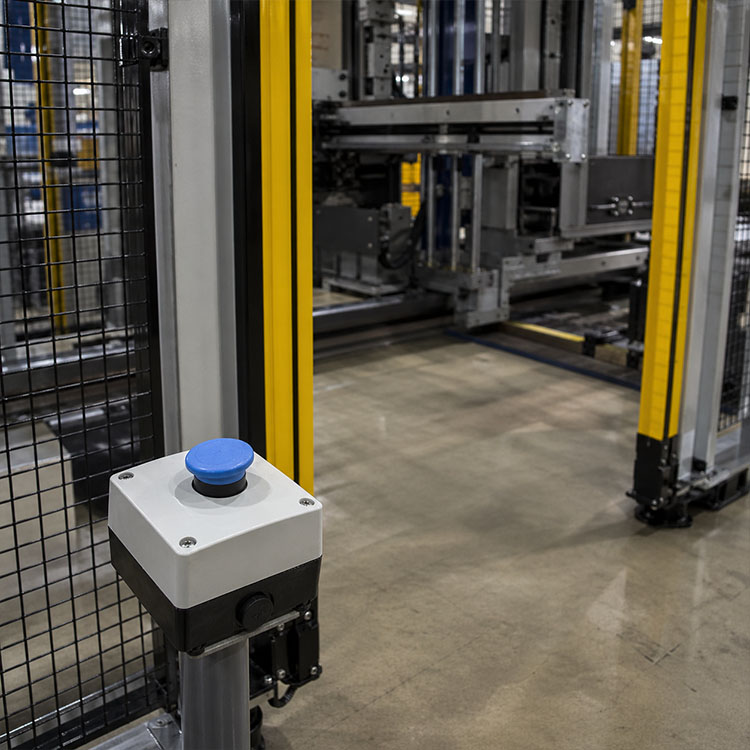
Die Rückstellung sollte normalerweise erst dann erfolgen, wenn der geschützte Bereich nachweislich frei ist. Der Rückstellknopf sollte sich außerhalb des Gefahrenbereichs befinden. Sie sollte so angebracht sein, dass die Person, die sie betätigt, den Gefahrenbereich sehen kann. Sie sollte vom Inneren des geschützten Bereichs aus nicht erreichbar sein. Und sie sollte nicht direkt eine gefährliche Bewegung auslösen.
Zurücksetzen ist nicht starten.
Sagen Sie es bei der Entwurfsprüfung noch einmal. Zurücksetzen ist nicht anfangen.
Dies wird durch eine geeignete Wiedereinschaltsperre des Lichtvorhangs erreicht:
Der Lichtvorhang erkennt das Eindringen und die OSSD-Ausgänge schalten ab.
Eine gefährliche Bewegung wird gestoppt oder verhindert.
Die Person verlässt die Zone.
Der Bediener prüft, ob die Zone leer ist.
Der Bediener führt einen absichtlichen manuellen Reset durch.
Bevor die gefährliche Bewegung wieder aufgenommen wird, ist ein separater Startbefehl erforderlich.
Wenn Ihre Reset-Taste das Gerät von selbst neu starten kann, würde ich das bis zum Beweis des Gegenteils als schwache Konstruktion bezeichnen.
Die Beweise: Verletzungen, Gerichtsakten und die hässlichen Details
Das U.S. Bureau of Labor Statistics berichtet 5.070 tödliche Arbeitsunfälle im Jahr 2024, ein Arbeiter stirbt alle 104 Minuten durch eine arbeitsbedingte Verletzung. Die Rate der tödlichen Verletzungen betrug 3,3 pro 100.000 Vollzeitbeschäftigte, von 3,5 im Jahr 2023, nach Angaben von BLS-Daten zu tödlichen Arbeitsunfällen.
Das ist keine Statistik, die sich nur auf den Lichtvorhang bezieht. Aber sie ist das Hintergrundgeräusch hinter jeder Bewachungsentscheidung.
BLS berichtete auch 2,5 Millionen nicht tödliche Verletzungen und Erkrankungen am Arbeitsplatz in der Privatwirtschaft im Jahr 2024, mit einer Gesamtrate der meldepflichtigen Fälle von 2,3 Fälle pro 100 Vollzeitäquivalente Arbeitnehmer, entsprechend seiner 2024 Bericht über nicht tödliche Verletzungen und Krankheiten.
Bringen Sie sie jetzt näher an die Druckmaschinen. NIOSHs Aktuelles Nachrichtenbulletin 49 über mechanische Kraftpressen kam zu dem Schluss, dass die Arbeit an Pressen trotz der OSHA-Normen eine hohe Verletzungs- und Amputationsrate mit sich bringt; die CDC/NIOSH-Zusammenfassung ist abrufbar unter CIB 49: Verletzungen und Amputationen bei der Arbeit mit mechanischen Pressen. Der historische Datensatz ist alt. Die Physik ist es nicht.
Das OSHRC Matsu Ohio Entscheidung ist lesenswert, weil sie zeigt, dass sich die Ermittler nicht nur um Katalogforderungen kümmern. In den Unterlagen wurden mehrere Pressen, Lichtvorhänge, Not-Aus-Schalter, Sicherheitsrelais, Kupplungsenergie und die Frage erörtert, ob ein Mitarbeiter, der im Lichtvorhang steht oder diesen durchdringt, einem unerwarteten Anlauf ausgesetzt sein könnte. In der Matsu Ohio OSHRC Entscheidung, Die Details rund um das Eindringen von Lichtvorhängen, das Verhalten von Sicherheitsrelais und die Unmöglichkeit des Zurücksetzens sind genau die Art von hässlichen, praktischen Fakten, die nach einem Vorfall von Bedeutung sind.
Und dann gibt es noch die Briefmarke West Virginia Abweichungsakte. In der von der OSHA im Jahr 2021 erteilten dauerhaften Abweichung für eine TRUMPF TruLaser 8030 Zelle wurde ein mehrstufiger Wiederanlaufprozess nach dem Zugang beschrieben, der eine Sichtprüfung, das Betätigen eines Rückstellschalters, das Schließen einer Tür innerhalb von 3-4 Sekunden, indem Sie einen Schlüsselschalter auf dem HMI umlegen und den Dauerbetrieb aktivieren. Lesen Sie die Gestamp West Virginia OSHA-Abweichung. Diese Akte ist eine unverblümte Mahnung: Wenn es einen Ganzkörperzugang gibt, winken seriöse Arbeitgeber nicht mit der Reset-Logik. Sie dokumentieren sie.
Manueller Reset vs. Auto-Reset vs. Auto-Restart
Reset/Neustart Design
Was es bewirkt
Wo es passen könnte
Hauptausfallmodus
Meine Meinung
Manuelle Rückstellung des Lichtvorhangs
Erfordert absichtliches Zurücksetzen, nachdem das Messfeld gelöscht wurde
Reset-Taster blind montiert oder von innen erreichbar
Bester Standard für Personalzugang
Automatisches Zurücksetzen des Lichtvorhangs
Schaltet den Sicherheitsausgang in den Bereitschaftszustand, wenn die Strahlen frei sind
Eingeschränkte Öffnungen, bei denen ein Eindringen des Körpers nicht möglich ist
Geht davon aus, dass sich niemand in der Gefahrenzone aufhält
Nützlich, aber missbraucht
Auto-Neustart
Ermöglicht die automatische Wiederaufnahme gefährlicher Bewegungen, sobald die Bedingungen geklärt sind
Seltene technisch bedingte Fälle mit nachgewiesener Exposition von Nicht-Personen
Unerwartete Bewegung nach dem Zugriff
Bis zum Beweis der Unbedenklichkeit als schuldig behandeln
Verriegelung neu starten
Verhindert einen Neustart, bis die Reset/Start-Sequenz abgeschlossen ist
Jede durchgehende Gefahr
Reset verwechselt mit Start
Unverzichtbar für den Ganzkörperzugang
Zusätzliche Anwesenheitserfassung
Detektiert Personen innerhalb der Zone nach dem Eintritt
Große Zellen, mehrseitiger Zugang, Blindzonen
Tote Zonen und schlechte Validierung
Wird oft bei Lichtvorhängen benötigt
Wo ein manueller Reset in echten Maschinen erforderlich ist
Eine manuelle Rückstellung ist erforderlich, wenn das Löschen des Lichtvorhangs nicht beweist, dass der Gefahrenbereich leer ist.
Dazu gehören:
Roboter-Zellen
Wenn eine Person am Lichtvorhang vorbeigehen und hinter dem Robotersockel, der Vorrichtung, dem Schweißtisch, dem Schutzpfosten oder dem Materialregal stehen kann, verwenden Sie eine manuelle Rückstellung mit Wiederanlaufsperre. Fügen Sie eine interne Anwesenheitserkennung hinzu, wenn die Sichtverhältnisse schlecht sind. Eine Rücksetztaste außerhalb der Zelle reicht nicht aus, wenn der Bediener nicht den gesamten Bereich einsehen kann.
Hydraulische Pressen und Stanzmaschinen
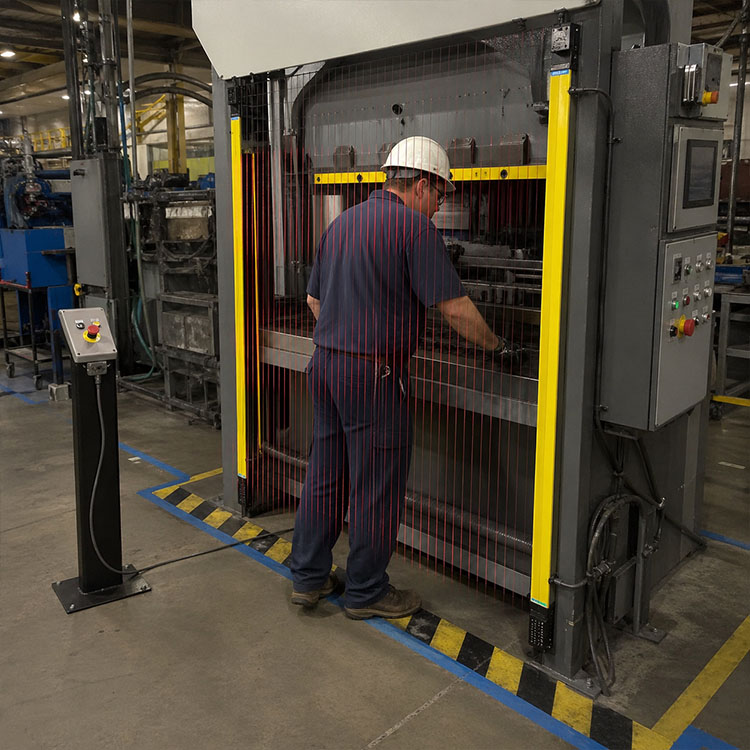
Pressen sind unnachgiebig. Eine Sicherheitslichtvorhang-Rückstellfunktion rund um eine Presse sollte an die Stoppzeit, den Sicherheitsabstand, die OSSD-Reaktion, das Kupplungs-/Bremsverhalten, den Ventilzustand, die EDM-Rückmeldung und die Frage, ob die Person im geschützten Bereich bleiben kann, gebunden sein.
Bei gröberen, breiteren und energiereicheren Maschinen sollten Sie Optionen für schwere Maschinenlichtvorhänge anstatt ein kleines Allzweckmodell in eine Aufgabe zu zwingen, für die es nicht gedacht war.
Palettierer, Förderer und Verpackungslinien
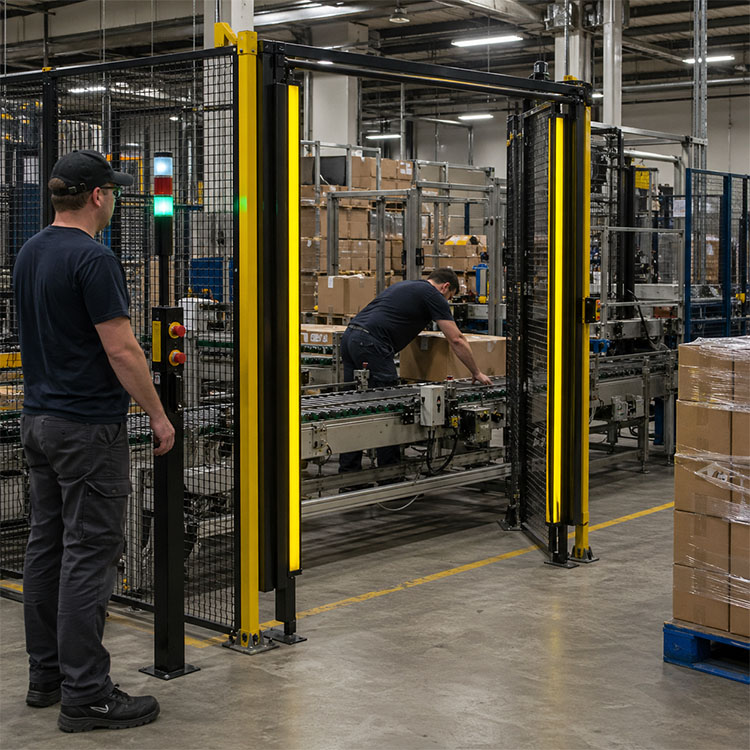
Ein Förderer mit einer begehbaren Öffnung ist keine Kleinteileschurre. Wenn jemand durch den Lichtvorhang treten kann, um einen Stau zu beseitigen, heruntergefallene Kartons aufzuheben, einen Sensor einzustellen oder eine Rolle zu reinigen, gehört eine manuelle Rückstellung in die Konstruktion.
Mehrseitiger Maschinenzugang
Je mehr Seiten Sie schützen, desto größer ist die Gefahr von toten Winkeln, verwirrenden Rücksetzstationen und falschen Annahmen. Ein einzelner Lichtvorhang deckt möglicherweise nicht das tatsächliche Zugangsmuster ab. Verwenden Sie Mehrseitige Zugangsschutz-Lichtvorhänge wo die Geometrie es zulässt, und lesen Sie den praktischen Leitfaden über Schutz des mehrseitigen Maschinenzugangs ohne Überbauung bevor Sie Hardware hinzufügen, nur um sich besser zu fühlen.
Wartungs- und Reinigungsaufgaben
In der Reinigung verstecken sich gerne Sicherheitsmängel. Eine Anlage ist defekt, der Schrott stapelt sich, und jemand sagt: “Setzen Sie sie einfach zurück.” Nein. Wenn die Reinigung einen Ganzkörperzugriff erfordert, muss die Rücksetzsequenz davon ausgehen, dass sich noch ein echter Mensch darin befindet.
Der Standort der Reset-Taste ist ein juristisches Exponat, das nur darauf wartet, zu passieren
Eine Reset-Taste ist ein Zeuge.
Es sagt den Ermittlern, wo der Bediener stand. Sie sagt ihnen, was der Bediener sehen konnte. Sie sagt ihnen, ob der Entwurf eine Überprüfung oder blindes Vertrauen erwartete. Sie sagt ihnen, ob Reset und Neustart getrennt waren.
Die Rücksetzvorrichtung sollte normalerweise sein:
Außerhalb des Gefahrenbereichs
Nicht erreichbar vom Inneren der Gefahrenzone aus
Positionierung mit freier Sicht auf das Schutzgebiet
Geschützt gegen unbeabsichtigte Betätigung
Getrennt von der Startsteuerung der Maschine
Verbunden durch ein Sicherheitsrelais oder eine Sicherheits-SPS als Teil einer validierten Sicherheitsfunktion
Geprüft bei der Inbetriebnahme und der regelmäßigen Inspektion
An dieser Stelle hören ISO 13849-1, IEC 61496, PL d, PL e, Kategorie 3, Kategorie 4, SIL 2, SIL 3, OSSD, EDM, STO und Stoppzeitmessung auf, Akronym-Suppe zu sein. Sie werden zu Beweisen.
Hier ist das Muster, das ich für Ganzkörperzugangslichtvorhänge verwende:
Verwenden Sie den Sicherheitslichtvorhang zur Erkennung. Senden Sie zwei OSSD-Ausgänge an ein Sicherheitsrelais oder eine Sicherheits-SPS. Verwenden Sie EDM-Rückmeldungen, wenn Schütze, Relais oder Ventile gefährliche Energie steuern. Platzieren Sie den Rückstellknopf außerhalb der Gefahrenzone bei voller Sichtbarkeit. Erfordern Sie eine manuelle Rückstellung nach einer Strahlunterbrechung. Erfordern Sie einen separaten Startbefehl nach dem Reset. Verwenden Sie interne Anwesenheitssensoren, verriegelte Tore oder Sicherheitsscanner, wenn sich der Bediener nach dem Betreten vor dem Lichtvorhang verbergen kann.
Einfach funktioniert.
Aber einfach muss validiert werden.
Ich würde auch den Status in der HMI protokollieren, aber ich würde die Standard-SPS-Logik nicht zur Autorität für die Personensicherheit werden lassen. Ein Statusbit ist keine Sicherheitsfunktion. Ein Armaturenbrett ist keine Rücksetzstation. Und ein Ethernet-Paket beweist nicht, dass sich eine Person nicht in einer Roboterzelle befindet.
Wenn Ihr Projekt Fernrückstellung, HMI-Reset, Ethernet-Diagnose, Sicherheits-SPS-Tags oder vernetzte Überwachung von Sicherheitsgeräten umfasst, muss die Seite auf Grenzwerte für Ethernet-Reset und SPS-Statusüberwachung sollte Pflichtlektüre sein.
FAQs
Wann ist eine manuelle Rückstellung nach einem Ganzkörperzugang durch einen Lichtvorhang erforderlich?
Eine manuelle Rückstellung ist nach einem Ganzkörperzugang durch einen Lichtvorhang erforderlich, wenn eine Person das Erfassungsfeld überschreiten kann, im Gefahrenbereich verbleibt und nach dem Löschen der Strahlen vor dem Lichtvorhang verborgen ist, da eine automatische Rückstellung einen unerwarteten Neustart ermöglichen könnte, während die Person noch exponiert ist.
In der Praxis gilt dies für Roboterzellen, große Pressen, Palettierer, Förderbänder, Verpackungslinien und mehrseitige Maschinenöffnungen, bei denen der Lichtvorhang eher eine Eingangsbegrenzung als eine kontinuierliche Anwesenheitserkennung im Gefahrenbereich darstellt.
Was ist eine Wiederanlaufsperre für Lichtvorhänge?
Eine Lichtgitter-Wiederanlaufsperre ist eine Sicherheitssteuerungsfunktion, die verhindert, dass eine gefährliche Bewegung automatisch wieder aufgenommen wird, nachdem das Sensorfeld unterbrochen wurde, so dass ein absichtliches Zurücksetzen und ein separater Startbefehl erforderlich sind, bevor die Maschine wieder laufen kann, in der Regel aus einer verifizierten Sichtposition.
Es geht darum, “das Feld ist frei” von “die Maschine darf sich bewegen” zu trennen. Diese Trennung ist vor allem dann wichtig, wenn Gefahren für den Ganzkörperzugang oder die Durchfahrt bestehen.
Wo soll der Rückstellknopf des Sicherheitslichtvorhangs angebracht werden?
Ein Sicherheitslichtvorhang-Rückstellknopf sollte sich außerhalb des Gefahrenbereichs befinden, so angebracht sein, dass der Bediener überprüfen kann, ob der Gefahrenbereich leer ist, und so konstruiert sein, dass er nicht vom Inneren des geschützten Raums aus erreicht oder als direkter Startbefehl verwendet werden kann.
Wenn die Rücksetzstation nicht den gesamten Gefahrenbereich überblicken kann, ist ein zusätzliches Sichtfeld, zusätzliche Rücksetzstationen, eine interne Anwesenheitserkennung oder eine andere Sicherungsarchitektur erforderlich.
Ist eine automatische Rückstellung bei einem Sicherheitslichtvorhang zulässig?
Die automatische Rückstellung kann für einen Sicherheitslichtvorhang akzeptabel sein, wenn die Risikobewertung beweist, dass eine Person nicht hindurchgehen kann, nicht unentdeckt bleibt, nicht eingeklemmt wird oder unerwarteten gefährlichen Bewegungen ausgesetzt ist, nachdem die Strahlen gelöscht wurden und die OSSD-Ausgänge wieder in Bereitschaft sind.
Ich würde das automatische Zurücksetzen nur für eingeschränkte Öffnungen, Materialübergabepunkte oder Prozessunterbrechungen in Betracht ziehen, bei denen ein Ganzkörperzugang nicht glaubwürdig ist. Bei begehbarem Zugang ist dies nicht der Standard.
Was bedeutet Ganzkörperzugang bei Lichtgitterwächtern?
Ganzkörperzugang bedeutet, dass die bewachte Öffnung groß genug ist oder die Anordnung so großzügig ist, dass eine Person durch die Lichtvorhangebene treten und sich in den Gefahrenbereich begeben kann, ohne das Erfassungsfeld ständig zu unterbrechen, im Gegensatz zum einfachen Einführen der Hand an einem begrenzten Einsatzort.
Dies ist die Durchgangsgefahr, die eine manuelle Rückstellung und Wiedereinschaltsperre erforderlich macht. Wenn der Lichtvorhang nicht nachweisen kann, dass die Person den Raum verlassen hat, darf das Kontrollsystem dies nicht annehmen.
Wie setzt man einen Sicherheitslichtvorhang richtig zurück?
Sie setzen einen Sicherheitslichtvorhang korrekt zurück, indem Sie das Sensorfeld löschen, überprüfen, ob der Gefahrenbereich leer ist, alle Fehlerbedingungen beheben, die zugelassene Rücksetzvorrichtung betätigen und dann einen separaten Startbefehl erst dann verwenden, wenn das Sicherheitsrelais oder die Sicherheitssteuerung die Rücksetzung akzeptiert hat.
Bringen Sie den Bedienern nicht bei, das Zurücksetzen als Produktionsabkürzung zu betrachten. Bringen Sie ihnen bei, dass sie es als Sicherheitsüberprüfungsschritt betrachten.
Ihre nächsten Schritte: Lassen Sie die Reset-Logik nicht länger ein Detail des Panels sein
Wenn Ihre Maschine den Ganzkörperzugang durch einen Lichtvorhang ermöglicht, genehmigen Sie die automatische Rückstellung erst dann, wenn die Risikobewertung beweist, dass sich eine Person nicht im Gefahrenbereich aufhalten kann. Überprüfen Sie die Zugangsgeometrie, die Anhaltezeit, den Sicherheitsabstand, die OSSD-Verkabelung, die EDM-Rückmeldung, die Position der Rücksetztaste, die Wiederanlaufsperre und das Validierungsprotokoll.
Schicken Sie Ihr Maschinenlayout, die Größe der Zugangsöffnung, die Daten zu den Nachlaufzeiten, die erforderliche Schutzhöhe und die Steuerungsarchitektur an einen Anbieter von Sicherheitslichtvorhängen, der die Rückstellfunktion besprechen wird, bevor er ein Angebot für die Hardware abgibt. Wenn die Antwort mit dem Strahlenabstand beginnt und endet, stellen Sie weitere Fragen.